
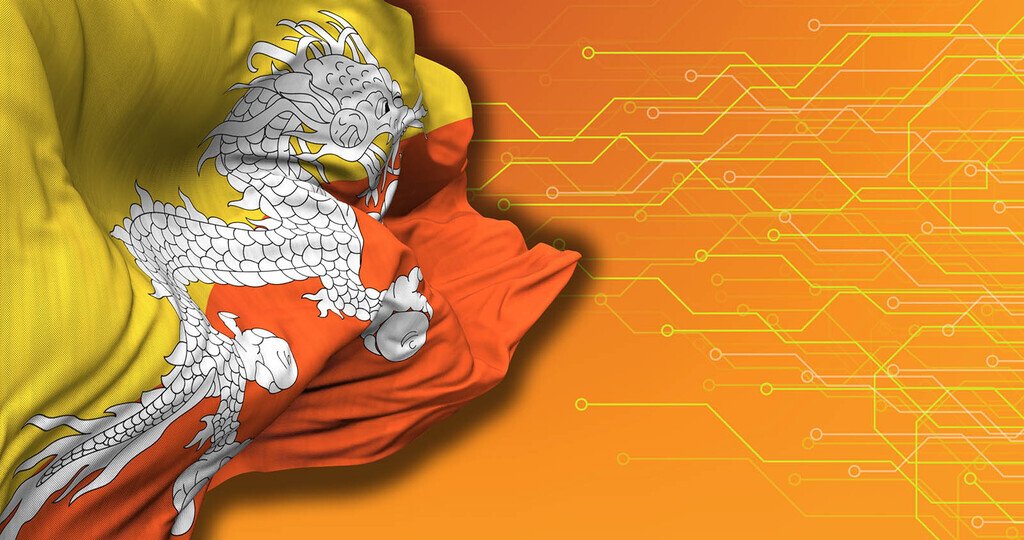
Bhutan is transitioning its National Digital Identity platform to the Ethereum blockchain, making it the first nation to utilize a public blockchain as the foundation of a national ID system.
The relocation enhances the security, transparency, and control of personal data by citizens. The migration aligns with Bhutan’s vision of a decentralized, self-sovereign digital community. The citizens will have the capability to create verifiable credentials, digitally sign, and verify their identity directly on the Ethereum distributed network.
Enhanced security and decentralization
The decision of Bhutan minimizes the use of centralized databases, which can easily be hacked, experience data breaches, and be manipulated. The government bases its national ID on Ethereum; therefore, sensitive information is saved in a secure and tamper-proof storage. The philosophy behind this approach is similar to that of India, where technology is valued; this policy encourages integrity, inclusion, and empowerment through innovation.
Prime Minister Lyonchen Tshering Tobgay stated that the distributed infrastructure of Ethereum can increase transparency and availability in Bhutan’s critical systems. The platform envisions establishing a user-owned and interoperable identity system between Bhutan and global ecosystems, without compromising the privacy of its citizens.
Global recognition and blockchain support
Industry leaders and the Ethereum Foundation have commended Bhutan’s move. Aya Miyaguchi, the President of the Ethereum Foundation, termed it as an illustration of blockchain developing systems of inclusiveness that benefit citizens. Ethereum co-founder Vitalik Buterin referred to decentralized digital identity as one of the essential building blocks of the future of the internet and made it clear that Bhutan was leading the way in embracing open-source solutions.
Bhutan has been keen on establishing a network that enables citizens to verify credentials anywhere in the world and control their personal information. This is in contrast to conventional centralized identity systems, which are restrictive in terms of privacy and flexibility.
Expanding blockchain innovation
By early 2026, the government intends to migrate the NDI platform to Ethereum. When this is done, citizens can demonstrate aspects of their identity without disclosing any personal information through cryptographic proofs. In addition to identity, Bhutan examines the use of blockchains in the field of governance and social services.
In 2025, the Ethereum Foundation sponsored a dApp hackathon in Paro, Bhutan. More than 70 developers developed projects such as transparent citizen response, land registry verification, and product provenance. NiaoDai Interchain in Bhutan is another partner of iDen2, which is developing Phenix, a modular identity solution intended for global use. The partnership will explore how the Bhutanese experience of national digital identities can benefit the rest of the world and increase the adoption of decentralized identities.
The migration of Bhutan to Ethereum represents a significant step forward in the realm of digital governance, as it positions the country as a global leader in secure and citizen-centered blockchain development.