
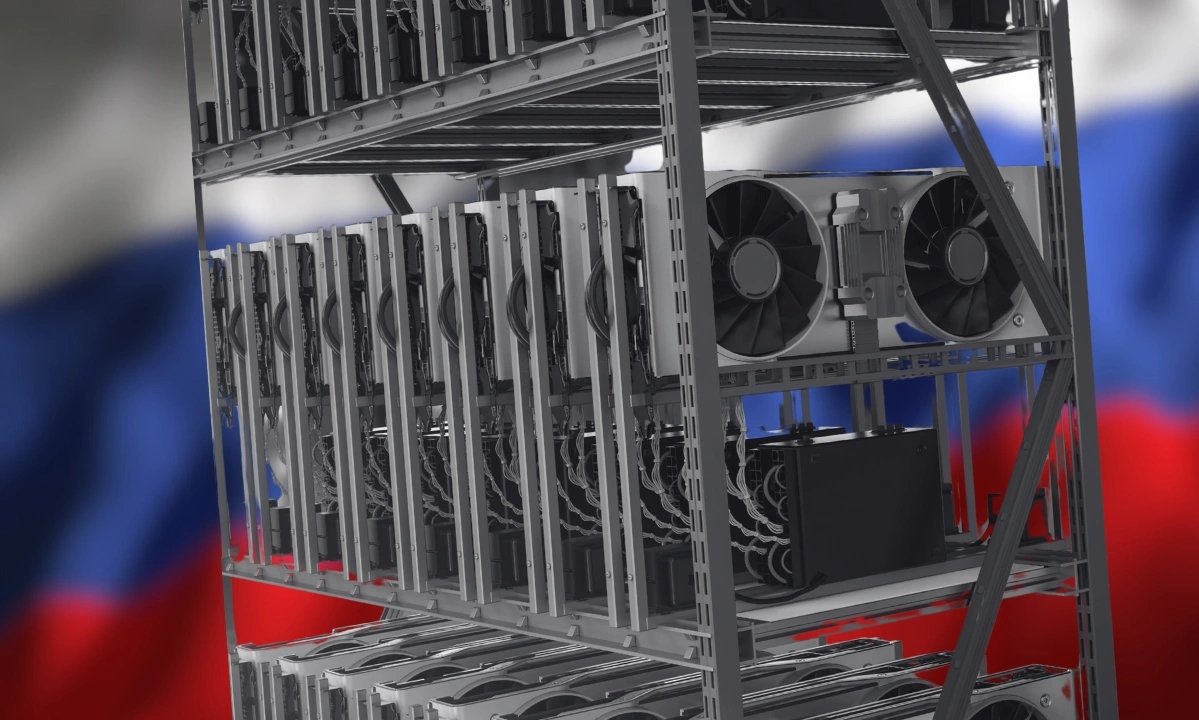
Russia has announced a ban on cryptocurrency mining in two regions in Siberia, a ban that is expected to remain in place until the spring. According to reports, the ban is aimed at avoiding electricity shortages in the territories during times of peak consumption in the cold winter.
According to reports, the mining ban is expected to affect the Republic of Buryatia and Zabaykalsky Krai (Transbaikal) for the fall and winter periods. The prohibition on crypto-related activity comes into effect on November 15 and will be in force until March 15, 2026, according to reports from outlets in Russia.
Russia orders crypto farms shutdown in Buryatia and Transbaikal
The RIA Novosti news agency referred to a decree adopted by the federal government last December, according to which the restrictions in Buryatia apply to almost its entire territory – 19 municipalities and the urban district of the capital Ulan-Ude. In the case of Zabaykalsky Krai, the temporary measures are being imposed in 14 municipal districts, the urban districts of Chita and the village of Aginskoye, as well as the closed administrative-territorial entity of Gorny.
Russia legalized the minting of digital assets in November 2024, but started restricting the energy-intensive industry shortly after, citing electricity deficits in parts of the country. Low and often state-subsidized electricity rates have been the main reason for the high concentration of mining enterprises in some corners of the vast Russian Federation.
What started as a seasonal prohibition in many instances was eventually converted to a permanent ban for the next six years, until March 15, 2031. The list of affected territories now features more than 10 regions, including the republics of the North Caucasus, such as Dagestan, North Ossetia, and Ingushetia, and the occupied parts of four Ukrainian oblasts – Donetsk, Luhansk, Zaporizhia, and Kherson.
For now, the ban in Buryatia and Transbaikal remains partial. It will be enforced across their districts over the next three days. The same will repeat every winter, again until 2031. That is, unless Russia changes its mind and makes it permanent. In June, a government commission postponed its decision on proposals to do that. Then, in September, the Russian Ministry of Energy saw no reason to expand the geographical coverage or the timeframe of current restrictions.
In October, Deputy Energy Minister Yevgeny Grabchak stated that the issue of introducing a year-round ban in Buryatia and Transbaikal was still under consideration. Meanwhile, a seasonal ban in the adjacent Irkutsk Oblast, with which Buryatia and Transbaikal form a single territory for the purposes of power generation and distribution, was upgraded to a full prohibition on mining in the southern parts of the region, dubbed the mining capital of Russia.